
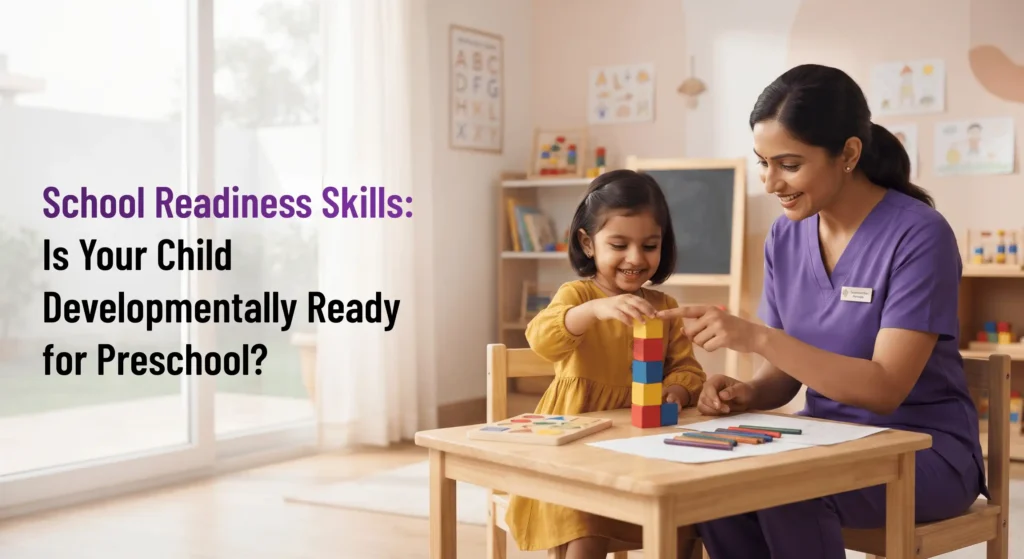
School Readiness Skills: Is Your Child Developmentally Ready for Preschool?
Understanding School Readiness Skills in Children
You’ve bought the uniform. The name stickers are on the water bottle. And somewhere between labelling crayons and practising the school route, a small worry creeps in: what if my child isn’t ready?
Almost every parent we meet has felt this. Usually, they’re thinking about letters and numbers. Can she write her name? Does he know his colours? But when preschool teachers talk about school readiness skills, they mean something much more ordinary. Can your child say “I need water”? Can they let another child have the swing for a minute? Can they open their own tiffin box at snack time?
That’s the real stuff of preschool. And the good news is that most of it is learned at home, in everyday moments, without you even noticing.
So let’s walk through it together: what readiness actually means, the seven areas worth watching, what you can do at home, and when it makes sense to ask for a professional opinion.
What Are School Readiness Skills? Understanding Preschool and Developmental Readiness
Put simply, school readiness skills are what help a small child cope in a room full of other small children. Listening. Playing. Handling big feelings. Using their hands and body. Managing a few things on their own.
Academic Skills vs Developmental Skills in Preschool Readiness
Think of academic skills as the “what” of learning: ABCs, 123s, shapes and colours. Developmental readiness is the “how”: sitting in a group, waiting, following along. Here’s a common picture. One child can recite the whole alphabet but melts down when circle time starts. Another knows only a handful of letters but happily sits, listens and joins in. The second child usually settles faster. Teachers can teach letters. They find it much harder to teach in a room where children can’t yet wait their turn.
Why Early Childhood Development Matters for School Readiness
The years before school are when a child’s brain is busiest building connections. The World Health Organization calls early childhood a key window for lifelong health and learning. Every story you read and every game of catch is quietly laying bricks for later.
How to Understand Individual Developmental Milestones Before Preschool
Milestones tell us what most children do around a certain age. Most, not all. One child chatters at two but won’t climb stairs; her cousin climbs everything and says very little. Both can be perfectly fine. What we look for is steady progress, not a perfect score.
7 Essential School Readiness Skills Every Preschool Child Should Develop
Your child doesn’t need to have all seven sorted on day one. Most children are strong in some and still growing in others. That’s how it should be.
1. Communication and Language Skills for Preschool Readiness
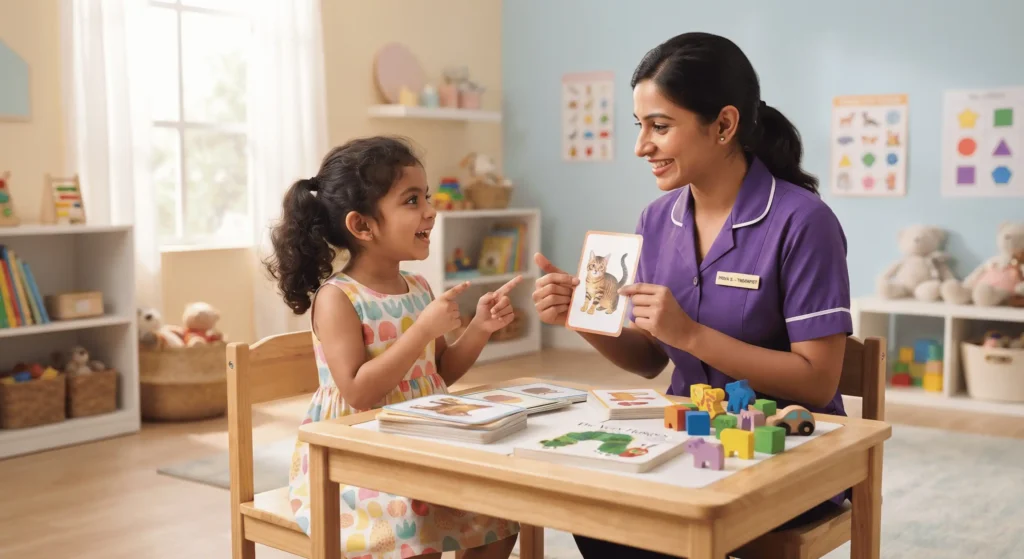
Can your child tell someone what they need? “Toilet.” “My turn.” “He took my car!” That’s the heart of it. Good communication skills in children also mean understanding simple questions and following what the teacher says. And if your child switches between Tamil and English in the same sentence, relax. That’s normal for children growing up with two languages, not a delay.
2. Social Interaction and Play Skills for School Readiness
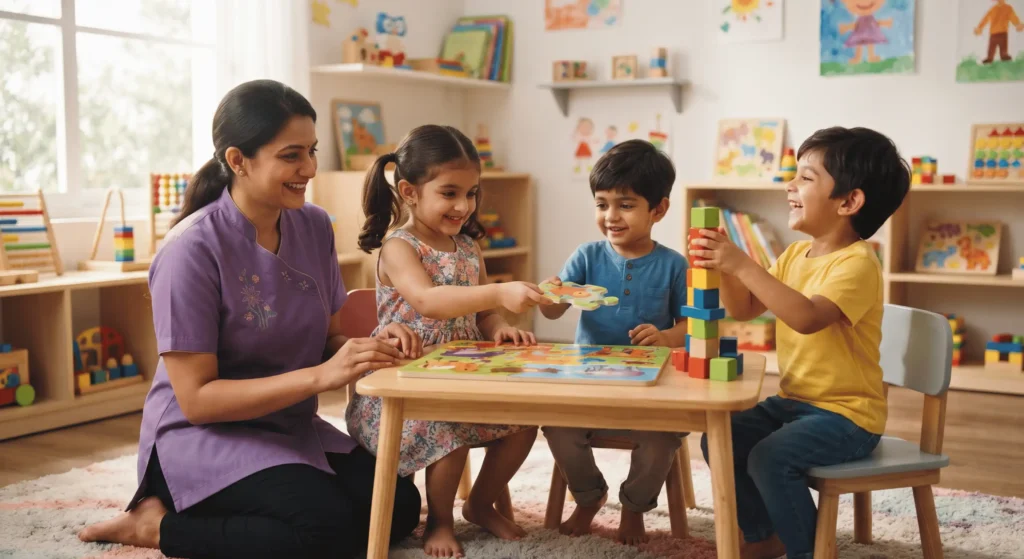
Preschool is a lot of sharing, waiting and joining in. Some children dive straight into a group game. Others watch from the side for a week first. Both are fine. A child who has mostly been around grandparents and adults may just need time to get used to children their own age.
3. Emotional Regulation and Behavioural Skills for Preschool Readiness
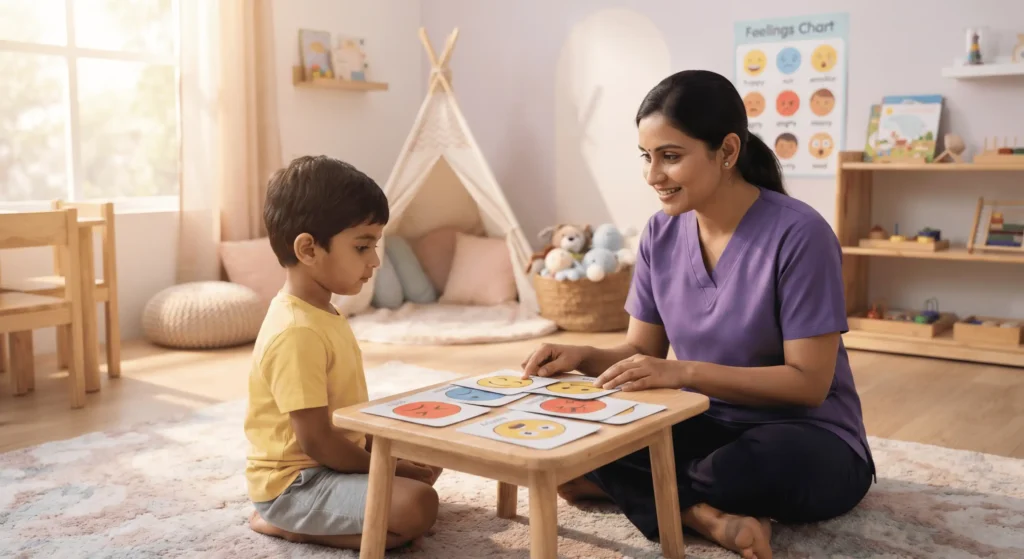
Tears at the school gate are not a sign of failure. They’re a sign of a three-year-old. Emotional readiness for preschool isn’t about never getting upset. It’s about being able to settle again, with a little help, and slowly learning to use words instead of only crying or hitting.
4. Fine Motor Skills and Handwriting Readiness for School Readiness
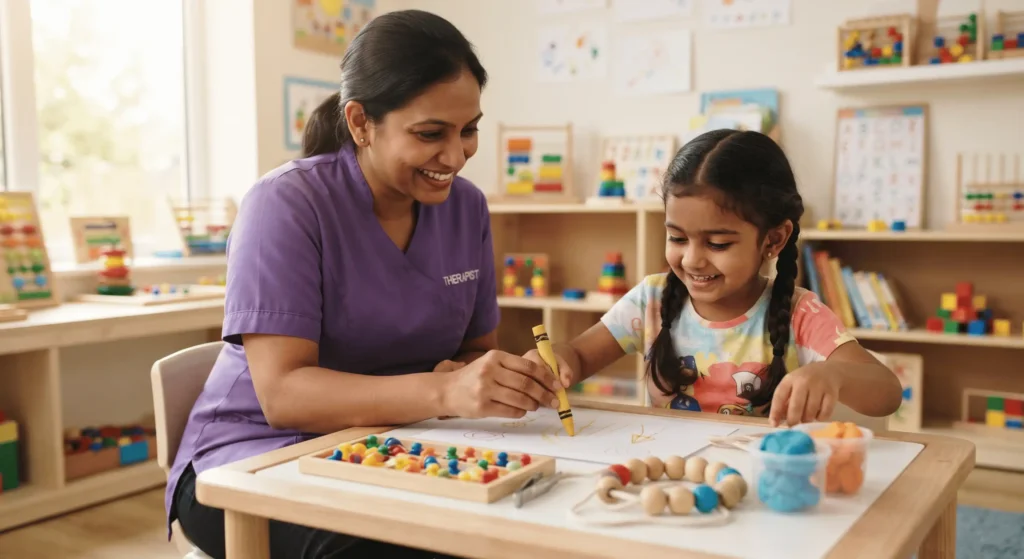
So much of the preschool day happens in the hands. Holding a crayon. Turning a page. Peeling a banana. Opening a stubborn lunch box lid. Good fine motor development builds the strength and control that handwriting readiness depends on later. Don’t rush the writing. Build the hands first.
5. Gross Motor Skills and Physical Development for Preschool Readiness
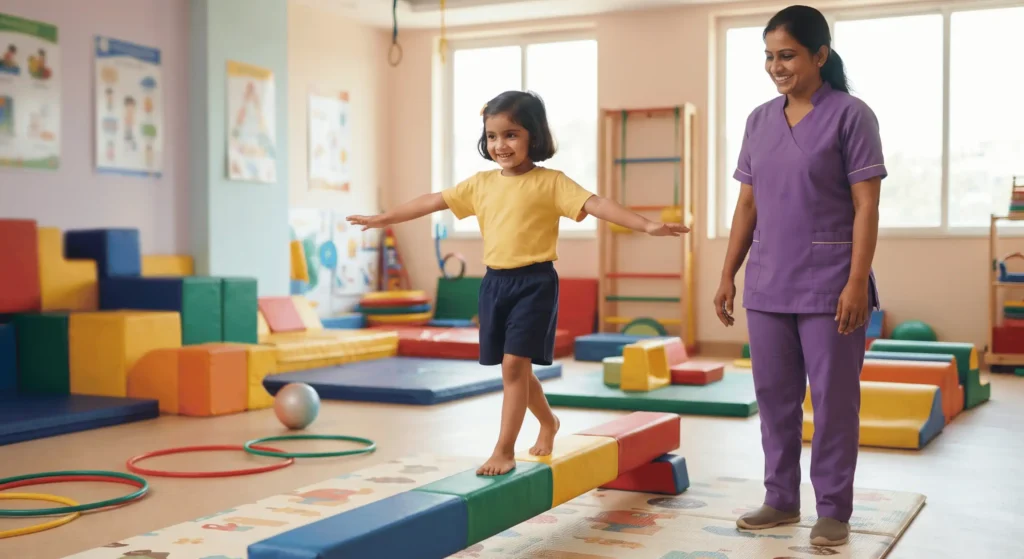
Running, climbing, jumping, balancing. These big movements matter more than many parents expect. Healthy physical development builds core strength, and core strength is what lets a child sit at a small table without sliding off the chair after five minutes.
6. Self-Care and Daily Living Skills for Independent School Readiness
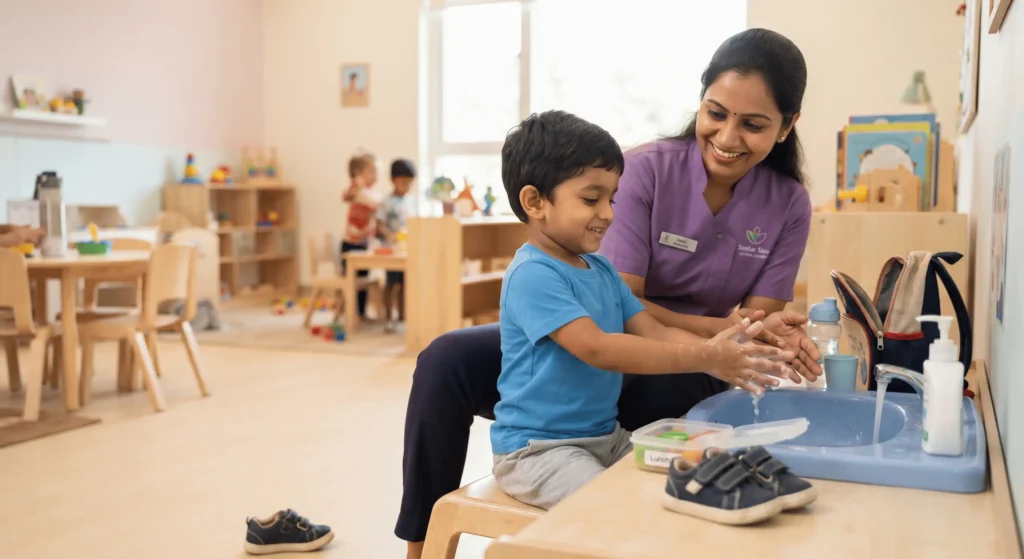
Washing hands. Eating without help. Slipping on footwear. Saying “I need to go” in time. Each one is small, but together they give a child a quiet confidence: I can manage here.
7. Attention, Listening and Following Instructions for Preschool Readiness
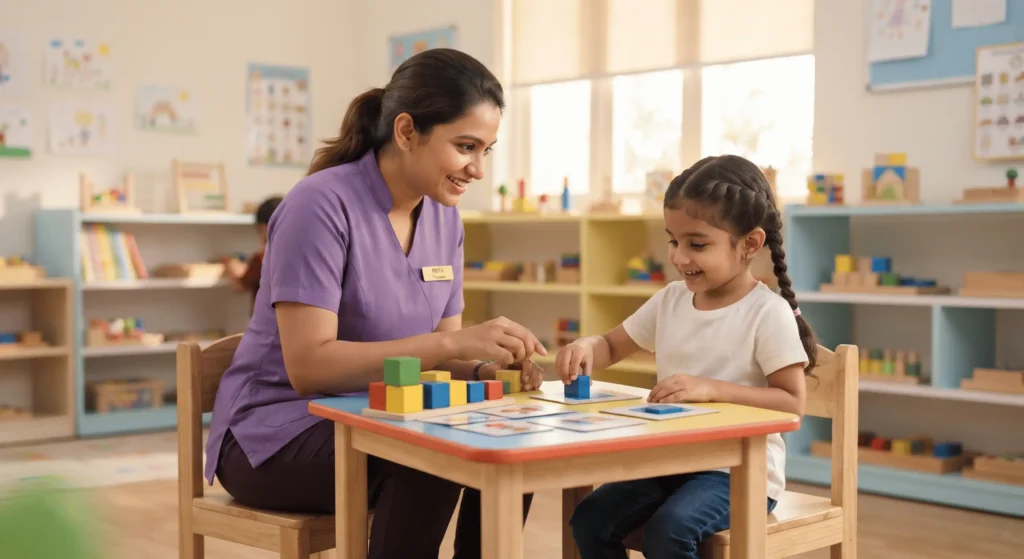
Can your child listen to a short story? Follow “Put your bag down and come sit here”? Then they’re doing well. Attention span in preschoolers is naturally short, often just a few minutes per activity. Nobody expects a three-year-old to sit still for half an hour.
School Readiness Skills Checklist: Developmental Milestones and Preschool Readiness Signs
What to Look for in a School Readiness Skills Checklist for Preschoolers
This isn’t an exam. Think about an ordinary day, not the best one or the worst one. Does your child usually:
- Let you know what they need, with words or short sentences?
- Follow a simple instruction, like “Bring your shoes”?
- Play near or with other children for a little while?
- Calm down after being upset, with your help?
- Hold a crayon and scribble, draw lines or try a circle?
- Run, climb and jump without falling all the time?
- Eat mostly by themselves and wash hands with some help?
- Tell you, or show you, when they need the toilet?
- Sit through a short story, rhyme or song?
Developmental Milestones and Preschool Readiness: What Parents Should Understand
Ticked most of these? Lovely. A few still in progress? That’s very common, especially if your child is one of the youngest in the class. If you’d like to read more, the CDC’s free “Learn the Signs. Act Early.” milestone guides are a good place to start. One thing to keep in mind: no checklist can diagnose a child. It just helps you notice patterns worth chatting about with your pediatrician or a therapist.
Signs Your Child May Need Additional Support With School Readiness Skills
Most children get there in their own time. But sometimes a parent’s gut says something’s not quite right, and that feeling deserves attention.
Common Developmental Concerns Affecting Preschool Readiness Skills
You might want to talk to someone if your child:
- Uses very few words, or is hard for even family to understand
- Shows little interest in other children or in playing together
- Has frequent, intense meltdowns that are very hard to calm
- Reacts strongly to everyday sounds, clothes, textures or foods
- Falls often, or avoids climbing and running altogether
- Has lost words or skills they used to have
Noticing one of these doesn’t mean something is wrong. It means it’s worth a closer look. A professional can help you understand developmental concerns in the context of your child as a whole, not just one behaviour.
When Should Parents Consider a School Readiness Assessment?
If a worry has stayed with you for a few months, if a teacher has gently mentioned something, or if you just can’t shake a feeling, it’s reasonable to ask. Many parents leave an assessment feeling relieved rather than worried. And if your child has lost skills they once had, please speak to your pediatrician soon rather than waiting it out.
How to Improve School Readiness Skills Through Preschool Preparation Activities at Home
You don’t need flashcards or fancy kits. Your kitchen, your balcony and the nearest park will do just fine.
Easy School Readiness Activities to Improve Fine Motor and Gross Motor Skills
- Hand your child a lump of dough while you make chapatis and let them roll tiny balls
- Peel stickers, thread big beads, tear old newspaper for a collage
- Have them pick up dried peas or rajma one by one and drop them into a cup
- Draw lines and circles on a slate, or with chalk on the floor
- Head to the park to climb, swing and kick a ball
- Do silly animal walks at home: bear crawls, frog jumps, crab walks
Preschool Preparation Activities to Develop Communication and Social Skills
- Read together every day and stop to ask, “What do you think happens next?”
- Roll a ball back and forth: “My turn, your turn”
- Play pretend shop, doctor or kitchen, and let your child be in charge
- Start with playdates with just one other child before bigger groups
- Put feelings into words for them: “You’re cross because the tower fell”
Daily Routine Activities to Improve Self-Care and Independence Before Preschool
- Let them pour water from a small jug into their own cup (spills included)
- Practise with the actual tiffin box they’ll take to school
- Give them time to put on their own slippers or velcro shoes
- Sing a short handwashing song before every meal
- Make a picture chart for the morning routine
Keep it light. Ten or fifteen minutes a day is plenty. If it stops being fun, stop and try again tomorrow.
How Occupational Therapy Supports School Readiness Skills and Preschool Development
“Occupational therapy” can sound like something for adults with jobs. For children, the “occupation” is being a child: playing, eating, dressing, learning and getting along with others. Most children never need it. For some, it makes these everyday jobs a lot less of a struggle.
Pediatric Occupational Therapy for Fine Motor and Sensory Development
A pediatric occupational therapist looks at how your child uses their hands, how they move and balance, and how they handle sensory information like noise, touch and movement. Some children find a noisy classroom overwhelming; others barely seem to notice what’s around them. For these children, sensory development support through sensory integration therapy may be part of the plan.
Occupational Therapy Activities for Social, Self-Care and School Readiness Skills
If you peeked into a session, you’d mostly see play. Obstacle courses. Building towers. Threading, cutting, buttoning a shirt on a teddy. Every game has a purpose, whether it’s a stronger grip, better sitting balance or waiting for a turn. Therapists also send parents home with ideas that fit into daily life.
How Early Intervention Supports School Readiness and Child Development
Early intervention simply means helping while skills are still taking shape. Every child moves at their own pace, but starting early gives them more time before classroom demands pile up. Occupational therapists often work alongside speech therapists and physiotherapists, so your child gets support that fits together.
How Parents Can Prepare Children for Preschool: School Readiness Tips and Practical Strategies
Simple School Readiness Tips for a Smooth Preschool Transition
- Walk or drive past the school a few times and talk about it
- Move bedtime and mealtimes to match the school day a few weeks early
- Read picture books about a child’s first day at school
- Keep goodbyes short and warm, and don’t sneak away
- Expect some tearful mornings; for most children they fade within a few weeks
Building Confidence and Independence Through Preschool Preparation
Give your child little jobs. Carrying their own bag. Choosing between two snacks. Putting toys back in the box. Praise the trying, not just the getting it right. A child who walks in thinking “I can do things” is already halfway there.
Support Your Child's School Readiness Skills with Professional Pediatric Therapy at Pebbles Therapy Centre
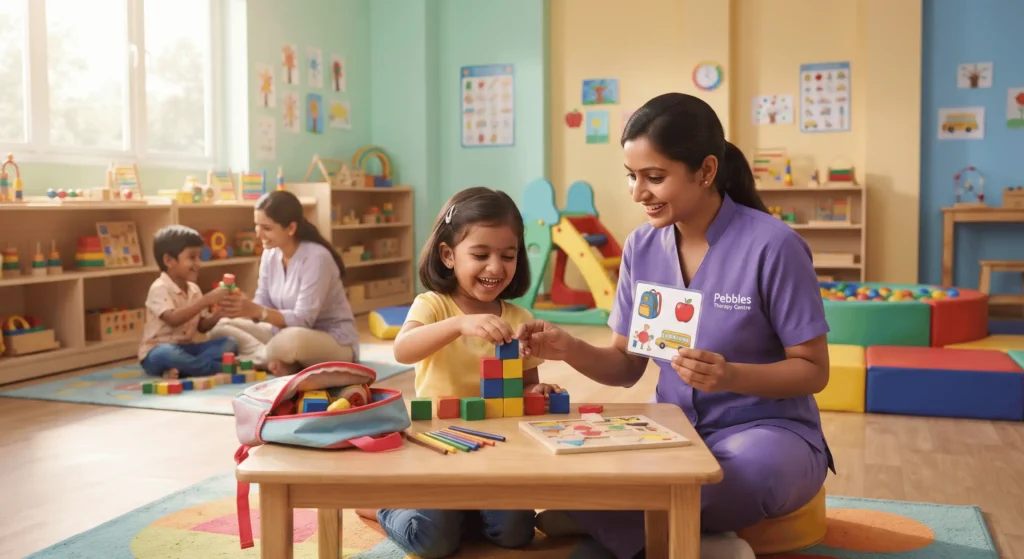
No two children arrive at preschool the same way, and that’s exactly how it should be. If you have questions about your child’s school readiness skills, we’re happy to talk. At Pebbles Therapy Centre, our pediatric occupational therapists, speech therapists, physiotherapists and sensory integration therapists start by getting to know your child, then explain what we see in plain, honest language. If therapy would help, we’ll tell you how. If your child is doing just fine, we’ll tell you that too.
Drop in at our Anna Nagar or Chrompet centre in Chennai, or contact Pebbles Therapy Centre to book a developmental assessment.
FAQs
Most children start somewhere between two and a half and four, depending on the school and the child. Age is only part of the picture. Being able to share needs, cope with a short goodbye and join in play usually matters more than the birthday.
Communication, social play, managing feelings, fine and gross motor skills, self-care and attention. If we had to pick two, it would be telling an adult what they need and bouncing back from small frustrations. Those make the first weeks much easier.
Read together, play turn-taking games, let them practise little self-care jobs like washing hands and opening their lunch box, and keep a steady routine. At this age, a few playful minutes each day beat any amount of formal teaching.
It can help children who find hand skills, sensory input, self-care or attention hard going. A pediatric occupational therapist works on these through play. Not every child needs therapy, though. An assessment is the honest way to find out.
Mostly, your child plays. The therapist watches, tries a few simple tasks like drawing, building and following instructions, and asks you about routines and early development. Afterwards, you’ll get a clear picture of strengths, areas that need support and practical next steps.
Take a breath, but don’t sit on it either. Jot down what you’re noticing, talk to your pediatrician, and think about a developmental assessment. Many children just need more time; some benefit from early support. If skills are being lost, seek advice promptly.