
Top 10 Early Signs of Sensory Processing Disorder in Toddlers [2026]
Parents frequently begin to observe Signs of Sensory Processing Disorder in Toddlers during everyday activities—dressing, feeding, play, or transitions. These behaviors can present as intense responses to touch, sound, movement, or textures, or challenges with calming down or following directions.
When the pattern repeats, it could be a sign of a sensory processing disorder symptoms in toddlers. An early identification enables families to obtain early intervention from providers, including an occupational therapist for toddlers in Chennai at a leading pediatric therapy centre in Chennai offering sensory integration therapy treatment.
What Is Sensory Processing Disorder (SPD) in Toddlers?
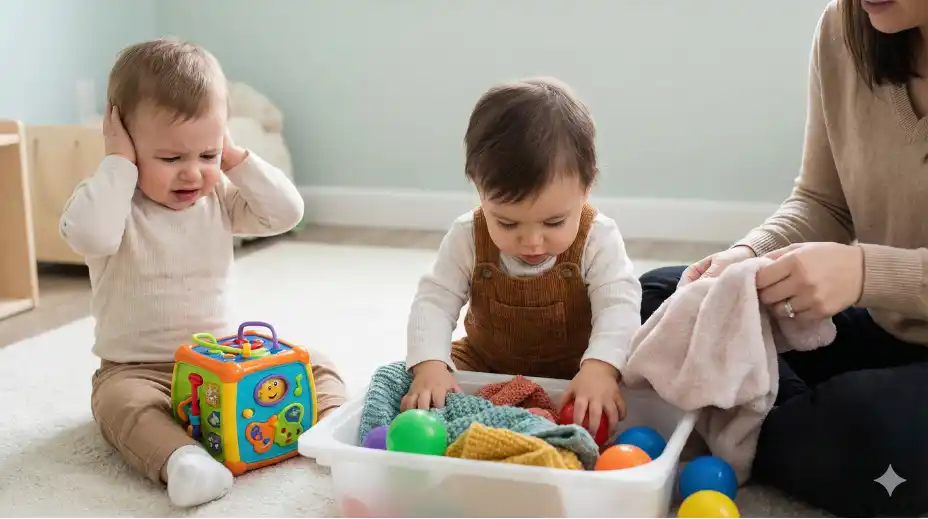
Sensory Processing Disorder (SPD) is when the brain has a difficult time receiving and responding to information that comes in through the senses of touch, sound, movement, sight, smell, taste, or body position. The result is either over or underresponse to sensory input, which has an impact on emotion, motor skills, attention, feeding, sleeping and emotional regulation.
How Sensory Input Works
Babies and toddlers make sense of the world through eight sensory pathways: tactile, visual, auditory, gustatory, olfactory, vestibular, proprioceptive, and interoceptive. Children may exhibit sensory problems in toddlers such as avoidance, seeking or mixed responses when these signals get mixed up or feel too intense. This discrepancy is frequently related to sensory modulation issues, sensory integration deficits, or variations in sensory routines.
Difference Between SPD & Autism, ADHD, Behavior Issues
While Sensory Processing Disorder (SPD) may be a situation that comes along with autism or ADHD, they are different:
- SPD: is a disorder that most of all impacts the sensory pathways
- Autism: is a disorder that impairs social communication, behaviour patterns, and sensory regulation
- ADHD: is a disorder that impairs attention, impulse control, and activity level
- Behavioural issues: are most of the time related to emotions or environment rather than to sensory processing
Toddlers with SPD frequently get ego and behavioral outbursts that are thus of their specific sensory input—textures, noise, lights, or unpredictable movement, whereas the causes are not always emotional.
Top 10 Early Signs of Sensory Processing Disorder in Toddlers Every Parent Should Know
Knowing how toddlers react to touch, sound, motion, textures, and daily routines can provide valuable insights into their sensory development. Some of these behaviours can be considered normal while others might indicate early sensory processing difficulties. This resource outlines the most common early indicators of sensory processing disorder in toddlers, so that parents can determine when specific responses are more than just personality or preference, and could benefit from supportive intervention.
1. Extreme Sensitivity to Touch (Tactile Defensiveness)

A toddler with tactile defensiveness may have a very strong reaction to certain textures, tags on clothing, grooming, and even unexpected touch. It occurs when the tactile system perceives normal tactile experiences as unpleasant or threatening.
Common Signs
- Refusing to wear certain fabrics
- Avoiding messy play like sand, paint, or clay
- Crying during hair brushing or bathing
- Pulling away during hugs
- Getting distressed when hands or feet feel dirty
These reactions reflect hypersensitive vs hyposensitive tactile responses that are commonly seen in early signs of sensory processing disorder.
2. Constant Movement or Craving Intense Physical Play (Sensory Seeking)
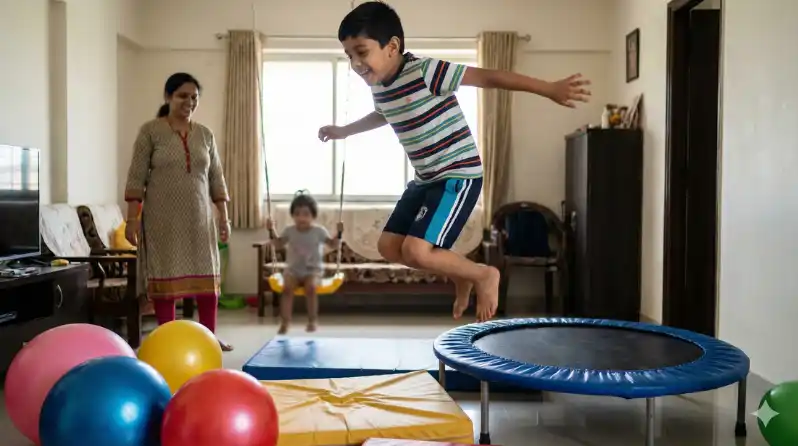
Some toddlers show unusually high activity levels due to proprioceptive issues in toddlers or under-responsive vestibular processing.
What This Looks Like
- Running, climbing, or jumping constantly
- Crashing into pillows or furniture
- Enjoying rough play more than gentle play
- Looking for high forces on joints or muscles
- Pushing, pulling, or lifting heavy things on a regular basis
These sensory seeking behaviors in toddlers help them get anchored. It’s not that they are misbehaving – they are self-regulating.
3. Avoiding Hugs, Textures, or Grooming Activities
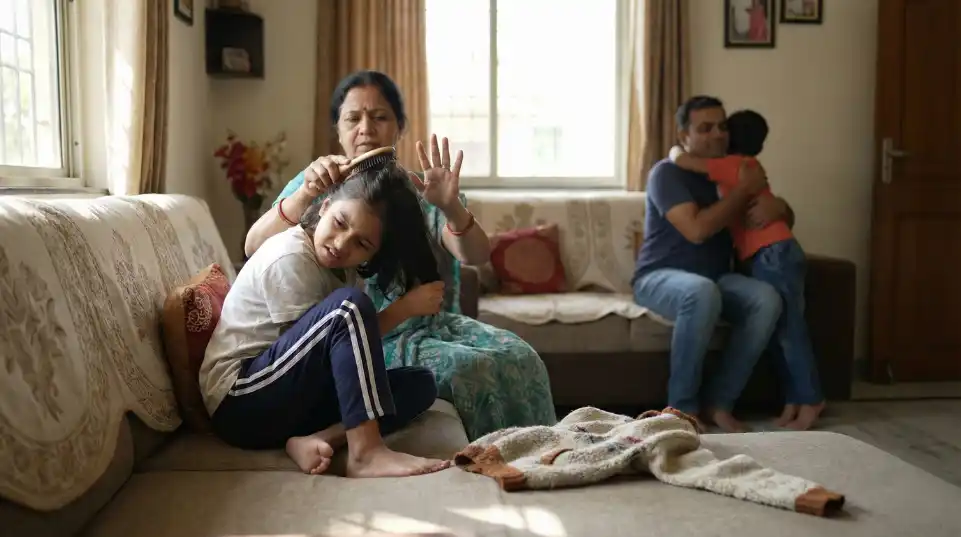
Avoidance is a key sign of hypersensitive sensory processing. Toddlers may experience regular touch as uncomfortable.
Examples
- Avoiding hugs or cuddles
- Not tolerating grass, sand, or textured surfaces
- Dislike of lotions, oils, or sunscreen
- Crying during nail trimming or haircuts
These behaviors are part of sensory avoiding behaviors in toddlers and they need to be met with gentle, predictable sensory input–not force.
4. Overreaction to Sounds, Lights, or Crowds (Sensory Overload)
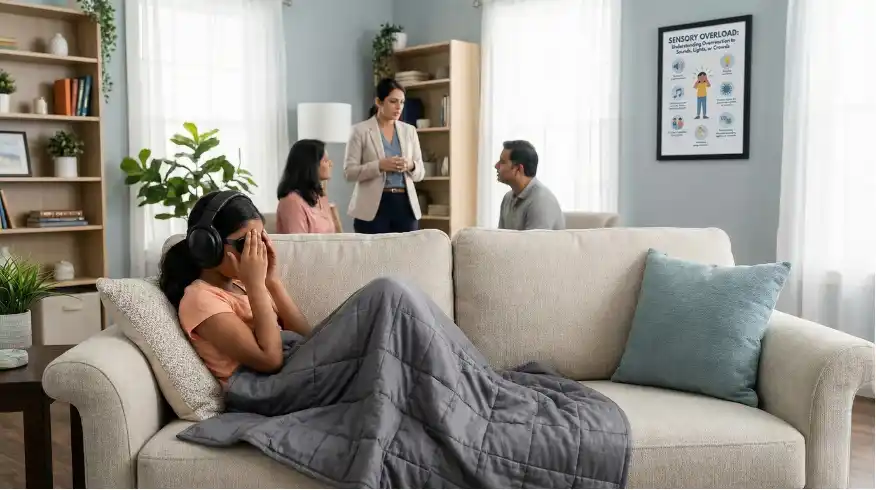
Sensory overload in toddlers happens when auditory or visual input becomes too much for the nervous system.
Behaviours Include
- Putting hands over ears when hearing loud or abrupt sounds
- Developing fear of appliances (blender, vacuum)
- Being so overwhelmed that one cannot function in malls, parties, or playgrounds
- Reacting strongly to bright lights or visual clutter
These overwhelm episodes frequently result in sensory meltdowns, which are not tantrums as they are neurological instead of behavioural.
5. Delayed Speech or Difficulty Following Instructions
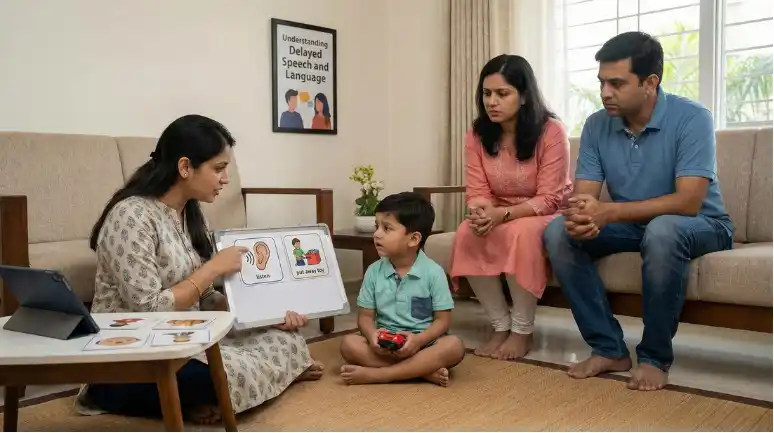
Speech delays can happen when toddlers struggle to process what they hear. It is not a hearing issue—it’s a sensory pathways issue.
Signs
- Difficulty filtering background noise
- Inconsistent response to their name
- Trouble following simple directions
- Slow processing of verbal information
Depending on the development, these patterns can manifest as SPD symptoms in 1-year-old, SPD symptoms in 2-year-old or SPD symptoms in 3-year-old.
6. Poor Balance & Frequent Falls (Vestibular Issues)
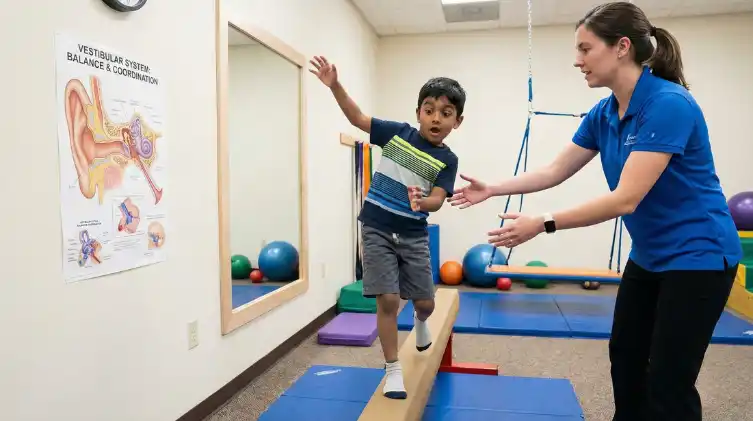
When toddlers show repeated balance problems, it may point to vestibular issues in toddlers.
Examples
- Fear of swings or slides
- Tripping frequently
- Difficulty climbing stairs
- Struggling to sit upright
- Hesitating on uneven surfaces
These behaviours reflect challenges with the brain’s ability to interpret movement and spatial orientation.
7. Difficulty with Fine Motor Tasks
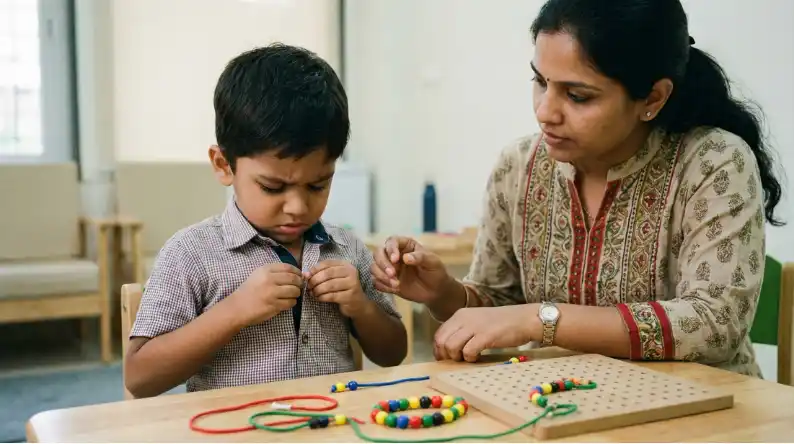
Fine motor difficulties are often linked to motor planning issues and sensory processing issues in toddlers.
Signs
- Trouble holding crayons or spoons
- Difficulty stacking blocks
- Avoiding puzzles or shape sorters
- Messy or weak grasp patterns
When toddlers avoid fine motor tasks, the root cause often lies in sensory integration difficulties rather than lack of interest.
8. Oral Sensory Behaviors (Chewing, Mouthing, Gagging on Food)
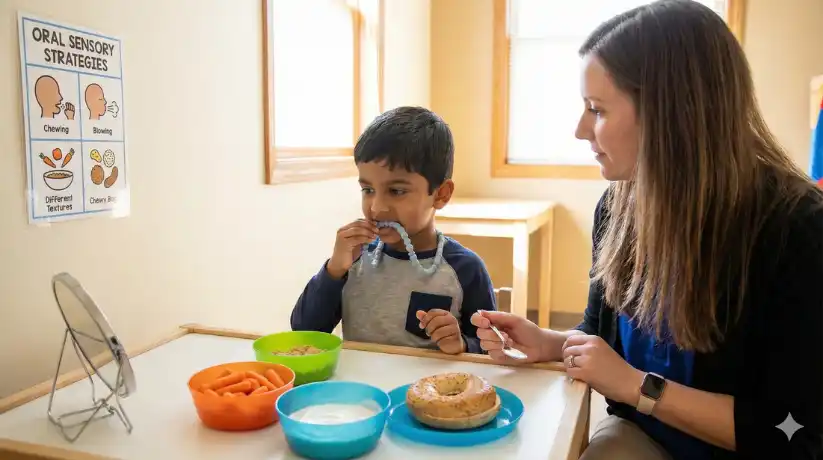
Children with oral sensory issues seek or avoid oral stimulation.
Signs
- Chewing on clothes, toys, or fingers
- Gagging on textured foods
- Preferring only crunchy or soft foods
- Refusing tooth brushing
This impacts feeding, speech development, and overall comfort.
9. Emotional Outbursts or Meltdowns During Routine Changes
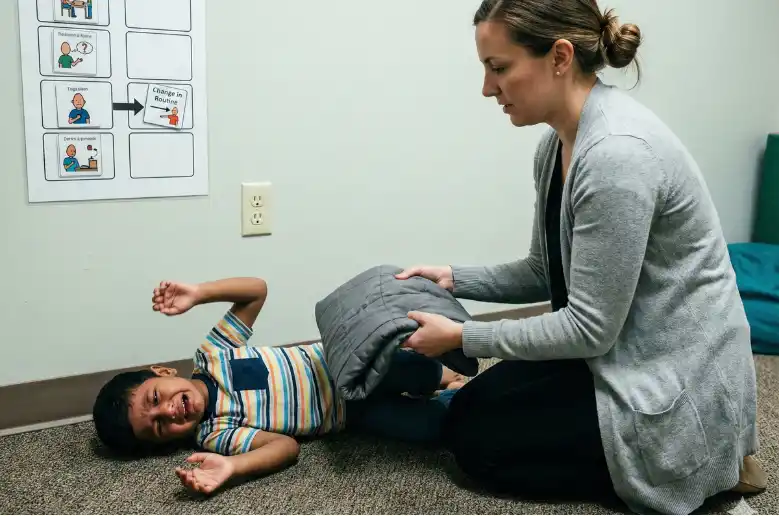
Sensory-sensitive toddlers rely heavily on predictability because sensory input can feel unpredictable.
Behaviours
- Meltdowns during transitions
- Distress in new environments
- Emotional shutdowns
- Difficulty recovering from upsets
These reflect sensory regulation challenges, not misbehavior.
10. Difficulty Calming Down or Self-Regulating
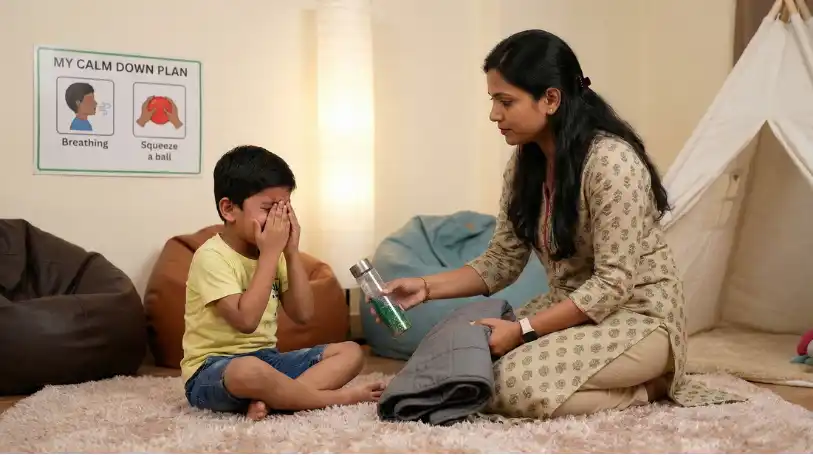
Sensory input plays a major role in calming, sleep, and emotional control.
Examples
- Needing movement to settle
- Difficulty falling asleep
- Becoming upset easily
- Taking a long time to calm down
These patterns often appear in toddlers with early childhood development delays linked to sensory processing.
When to Seek Help for Sensory Processing Disorder in Toddlers
Normal Differences vs Concerning Patterns
Behaviour becomes concerning when:
- It disrupts daily routines
- It is consistently more intense than peers
- Multiple sensory systems are affected
- It impacts feeding, sleep, or play
- It prevents participation in age-appropriate activities
When to Consult an OT
An occupational therapist for toddlers in Chennai can evaluate:
- sensory thresholds
- motor planning
- balance and coordination
- emotional regulation
- adaptive behaviour
If you keep seeing a toddler repeatedly having sensory issues and a professional psychologist is involved, then that is going to make the outcome much healthier after a longer period of time.
Recognizing such early sensory red flags allows parents to figure out their toddler’s distinct developmental needs and to react accordingly with love, understanding, and composure. In case multiple signs are constantly interfering with the household tasks, playing, or emotional regulation, then getting an early assessment will give you the answer and show you the way.
With the help provided in time, toddlers will be able to learn how to process sensory information in a less stressful way and as a result, they will be able to take part in normal life much more.
How Occupational Therapy Helps Toddlers With SPD
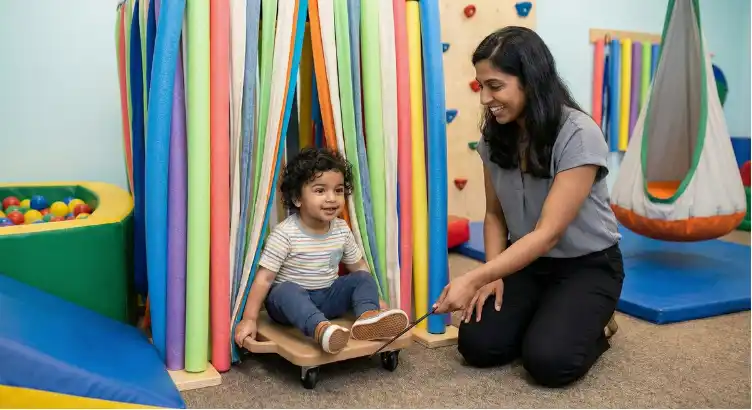
Sensory Integration Therapy
In therapy, toddlers experience structured sensory opportunities that help build stronger sensory pathways. Activities include:
- swings (vestibular)
- weighted play (proprioceptive)
- tactile bins (touch)
- obstacle courses (motor planning)
- calming routines (regulation)
This approach is core to sensory integration therapy in Chennai.
Parent Training
Parents learn strategies for:
- reducing sensory overload
- modifying environments
- establishing sensory routines
- responding to sensory meltdowns
Home Programs
Daily sensory activities help toddlers regulate and participate in routines smoothly.
Check our blog on Pediatric Occupational Therapy for Sensory Integration.
SPD Assessment at Pebbles Therapy Centre
Pebbles Therapy Centre—one of the established providers of pediatric occupational therapy in Chennai—offers sensory assessments and early intervention through trained pediatric therapists at child development centre in Anna Nagar & child therapy in Chrompet.
Our team assesses sensory presence, motor skills, and emotional regulation through the use of children’s friendly tools and structured observation.
Sensory differences are not the characteristics of a toddler, they only indicate how their nervous system is receiving the world. Getting familiar with the initial signs gives power to the parents to build up supportive surroundings, manage behaviour bravely, and request assistance as often necessary. Guided by early intervention, toddlers become able to control themselves, engage, and prosper.
FAQs
One of the symptoms of sensory disorder processing in toddlers includes being hypersensitive to some or all of the following: sound, touching, or movement. Also, sensory input is either constantly sought or avoided. They may have sudden outbursts, difficulty in feeding, lack of coordination, and trouble in settling down by themselves.
On the one hand, slight sensory preferences may disappear, on the other hand, persistent sensory difficulties may require support to enhance regulation and engagement.
If sensory patterns that are caused by your child interrupt daily routines such as feeding, grooming, play, sleep, or transitions then you should definitely take an OT consultation.
They can be together, but SPD can also be independent. SPD is mainly a condition that affects sensory processing.
It helps kids through sensory integration therapy, motor planning activities, parent training, and sensory routines that are made specifically for the child.